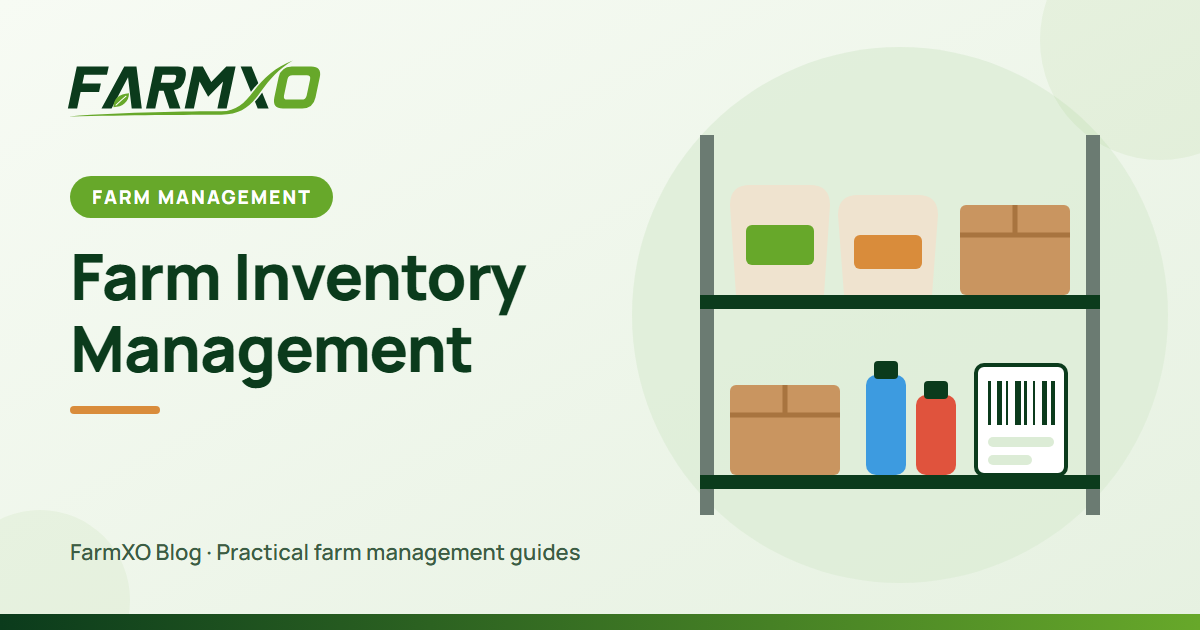
The farm store holds a surprising amount of money – seed, fertilizer, pesticides, fuel, feed and spare parts. Without good farm inventory management, that money leaks away through expired chemicals, damaged bags, theft and emergency purchases at peak prices. Worse, running out of an input at a critical moment can cost you yield.
What to include in farm inventory
- Seed and planting material – variety, lot number, germination and quantity
- Fertilizers – product, grade and number of bags
- Crop protection chemicals – product, active ingredient, batch, expiry date
- Fuel and lubricants
- Spare parts – filters, belts, nozzles, drip fittings
- Packaging – crates, bags, cartons
- Animal feed and veterinary supplies if you keep livestock
Step 1: Do a full stock count
Start by counting everything you have, with the unit of measure for each item (kg, litres, bags, pieces). This is your opening balance. Note expiry dates on chemicals and seed.
Step 2: Record every movement in and out
Inventory only stays accurate if every movement is recorded:
- Stock in: purchases, with supplier, date, quantity and cost
- Stock out: usage, with the field or crop it was used on, the quantity and who took it
- Adjustments: damage, expiry or count corrections, with a reason
Linking stock-out to a field is what turns inventory into cost data: you know exactly how much fertilizer each crop consumed.
Step 3: Set reorder levels
For each critical input, set a minimum stock level that triggers a purchase. Base it on how fast you use the item during the season and how long suppliers take to deliver. Your crop calendar tells you when demand will peak.
Step 4: Store inputs properly
- Keep fertilizer bags off the floor on pallets, in a dry, ventilated store
- Store pesticides in a separate, locked, ventilated area, away from food, feed and seed
- Use first-expiry-first-out (FEFO) for chemicals and seed
- Keep fuel in approved containers away from ignition sources
- Label shelves and keep the store organised so counts are quick
Step 5: Reconcile regularly
Do a physical count at least monthly in the season and compare it with your records. Large differences point to unrecorded use, wastage or theft – investigate them early.
Benefits of good farm inventory management
- No stock-outs during sowing, spraying or harvest
- Less capital tied up in excess stock
- Fewer losses to expiry, damage and theft
- Accurate input cost per crop for budgeting – see how to create a farm budget
- Traceability – which batch of chemical went on which field
Spreadsheet or inventory software?
A spreadsheet works for a small store managed by one person. As soon as several people take items from the store, or you want stock to deduct automatically when a field activity is logged, farm inventory software saves time and errors. AgriFarm inventory management tracks stock in and out, links usage to fields and crops, and alerts you when items run low.
Inventory is one of the core records in our farm record keeping guide and one of the best places to reduce farm input costs.
Frequently asked questions
How often should I count farm inventory?
Monthly during the active season and at the end of each season is a good routine. High-value or easily misused items like fuel and chemicals may deserve weekly checks.
What is FEFO?
First-expiry-first-out: always use the stock that expires soonest first. It is especially important for pesticides and seed, which lose effectiveness over time.